The Courtyard Premium: Underwriting Beijing's Hutong Hotel Conversions
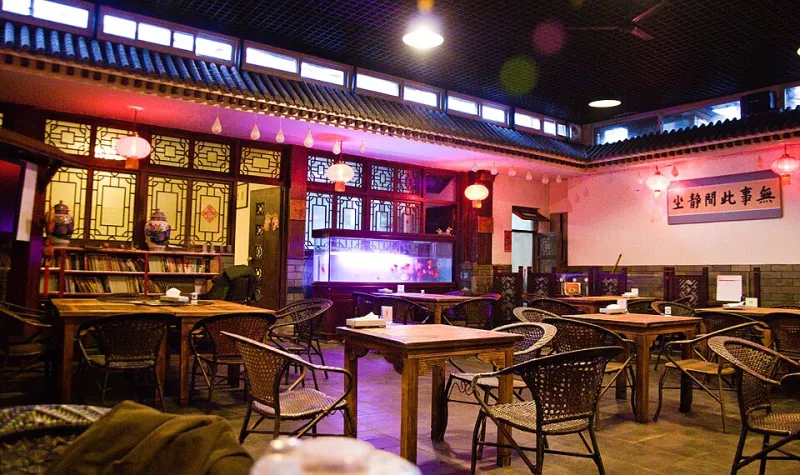
Photo: Mitch Altman, CC BY-SA 2.0, via Wikimedia Commons
Beijing's hutong neighborhoods have long been treated by outside capital as heritage scenery rather than hospitality inventory. That view is changing. In 2026, a small but visible set of courtyard conversions is being underwritten less as passion projects and more as boutique hotel assets with a distinct cultural moat, a credible sustainability narrative, and rate positioning that can rival established luxury addresses in the capital. For US hotel investors and family offices accustomed to adaptive-reuse projects in Charleston, Santa Fe, or Napa, the Beijing courtyard is unfamiliar—but not unintelligible.
From Heritage Asset to Hospitality Asset
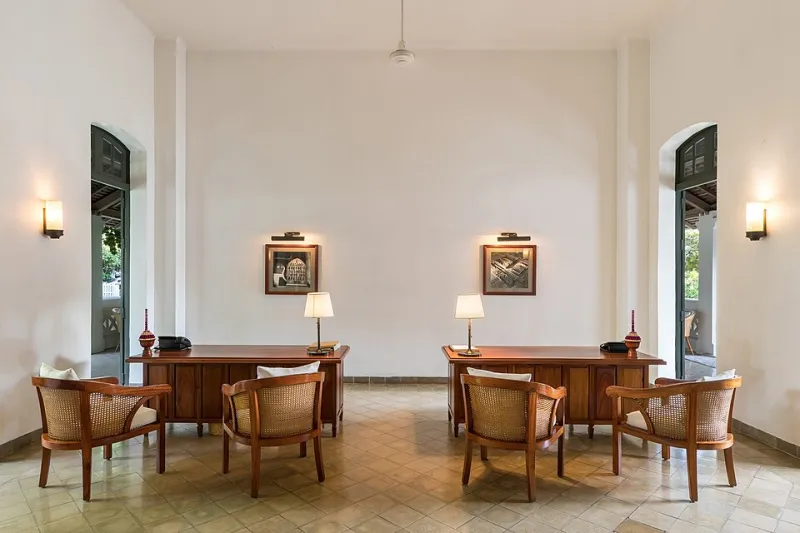
The typical hutong conversion is not a large-box hotel. It is a cluster of one-story or low-rise structures around a central court, often with limited room counts, constrained vehicle access, and a fabric that predates modern building codes. The luxury proposition comes from intimacy, privacy, and a sense of place that cannot be replicated in a new-build tower. Operators are pairing restored brickwork and timber with contemporary mechanical systems, subdued interiors, and high-touch service.
The investment case rests on a simple observation: Beijing has no shortage of luxury rooms, but it has a short supply of authentic courtyard experiences at a five-star service standard. That mismatch creates pricing power for well-executed assets, especially those near established commercial and cultural nodes. The risk is equally simple: heritage fabric is unforgiving, and a courtyard is not a hotel until it satisfies modern fire, structural, accessibility, and life-safety requirements.
The Underwriting Math: Scarcity, Rate, and Carbon
US hotel capital typically models courtyard conversions through the same lens as other boutique adaptive-reuse assets: cost per key, stabilized occupancy, average daily rate, food and beverage contribution, and exit multiple. In Beijing, the model needs additional lines. Heritage restoration is a separate capital bucket from base-building upgrades, and the two should not be blended into a single per-key figure. Conservation expertise, specialty craft labor, and approval-driven delays belong in the contingency rather than in the marketing story.
The revenue side is supported by scarcity, but scarcity alone does not underwrite a hotel. Courtyard assets usually carry a high service ratio relative to room count, which compresses operating margins. Food and beverage may be limited by kitchen and delivery constraints. Seasonal demand and corporate booking patterns matter. A credible model should stress-test rate assumptions against competitive sets that include both courtyard boutiques and conventional luxury hotels.
The carbon case is genuine but should be stated carefully. Reusing existing structure avoids the embodied carbon of demolition and new construction, and that saving can be material in a boutique conversion. However, upgrades to envelope, heating and cooling, hot water, and lighting can erode the benefit if poorly specified. US investors increasingly ask for a whole-life carbon comparison rather than a slogan. The stronger position is to show measured or modeled savings alongside a clear plan for operational efficiency.
Permitting and Operating Risk
Permitting is the central risk in any hutong conversion. Heritage review, structural intervention, fire egress, party-wall agreements, and neighborhood compatibility can each extend the timeline. The process is not opaque, but it is granular. A US investor should expect a local development partner and a conservation architect to sit at the center of the capital stack discussion, not at its periphery.
Operating risk is equally specific. Small room counts make labor productivity harder to achieve. Vehicle access can complicate luggage handling and food delivery. Noise and privacy expectations run in both directions: guests expect tranquility, and neighbors expect consideration. These are manageable issues, but they are not cosmetic. They belong in the pre-acquisition budget and in the operator's staffing model.
Why US Capital Is Watching
US hotel capital and family offices are drawn to Beijing courtyards for three reasons. First, the assets are differentiated in a market where branded luxury supply can feel homogeneous. Second, the sustainability narrative is tangible rather than abstract: heritage retention, lower embodied carbon, and efficient operations are visible to guests and lenders. Third, the ticket size can be smaller than a trophy tower acquisition, which makes the niche accessible to family offices and boutique hospitality funds.
That interest should be disciplined. Cross-border ownership structures, repatriation assumptions, and local operating partnerships require careful legal and tax review. Currency and liquidity assumptions should be modeled conservatively. The courtyard premium is real, but it is not a substitute for hotel underwriting discipline.
A Niche Worth Modeling, Not Chasing
Beijing's hutong conversions are unlikely to become a large institutional asset class. Their value lies in selectivity. The most credible projects will combine heritage authenticity, modern life-safety, efficient operations, and a rate strategy that does not overreach. For US investors, the opportunity is not to buy a postcard. It is to underwrite a small, resilient hospitality asset where cultural scarcity and carbon savings reinforce each other. In a capital city where luxury is increasingly expected to justify itself, that combination is worth a closer look.