Warmth as a Line Item: Auditing Beijing Hotel Exposure to a Changing Heating Grid
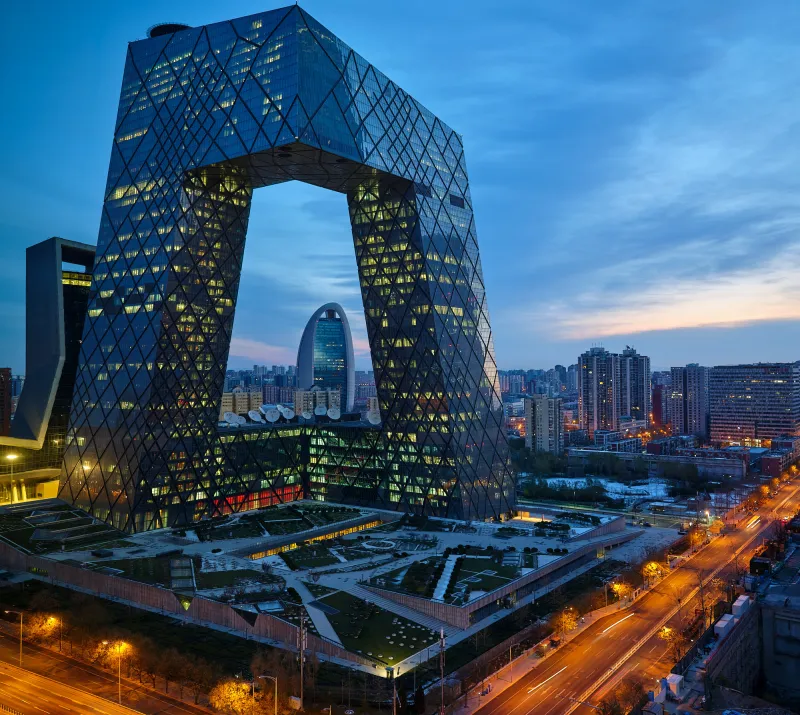
Photo: Beijing district heating plant winter steam luxury hotel exterior, via fcracer.com
On November 15, 2026, Beijing's municipal heating season opened on its customary schedule, and the city's luxury hotels, serviced apartments, and Grade A office towers began drawing warmth from a network that is being re-engineered underneath them. For a US investor or corporate occupier, the relevant question is no longer whether Beijing's heat will become cleaner. It is who pays for the transition, how quickly those costs reach net operating income, and whether a lower-carbon heating profile can be converted into measurable asset value.
The Heating Season Is a Balance-Sheet Season
District heating in Beijing is not a background utility. It is a seasonal operating system with capital implications. Hotels run hot water, pools, spas, laundries, and 24-hour comfort conditioning through the coldest months. Office towers may operate on weekday schedules, but their lobbies, trading floors, and tenant amenities still depend on stable heat. When the source of that heat changes, the building does not simply receive a cleaner commodity. It absorbs new technical requirements, new contract terms, and new performance risk.
That distinction matters for underwriting. A hotel's heating cost may sit inside a property management fee, a gross lease, or a service charge recovery, depending on the asset and the tenancy structure. US investors accustomed to Manhattan's Con Edison steam system will recognize the general shape of the exposure, but Beijing's regulated municipal model behaves differently. The tariff is administratively set, the supplier is often a state-linked entity, and the conversion pathway is shaped by municipal policy rather than by a single utility's capital plan.
How Beijing Prices Heat, and Why the Contract Matters
Beijing's non-residential district heating charges are typically quoted per square meter of heated floor area for a defined season, with adjustments for building height, use, and sometimes capacity reservation. The headline rate is only the beginning of diligence. The supplier contract may include capacity charges, metering arrangements, payment timing, interruption remedies, and adjustment mechanisms that determine how conversion costs are shared.
A US acquirer should obtain at least three heating seasons of invoices, the current supply agreement, and the substation metering records. The goal is to separate fixed capacity costs from variable consumption and to identify any clauses that permit pass-through of fuel, carbon, or infrastructure charges. In a market where heat is both a regulated service and a political priority, the contract is a risk allocation document as much as a utility bill.
The Conversion Risk Map: Coal, Waste Heat, Gas, and Electrons
Beijing has spent years displacing coal from its central districts and expanding cleaner supply. The current transition is less about a single fuel switch than about a portfolio of alternatives: waste-heat recovery from power plants, data centers, and sewage treatment; gas-fired peaking and backup; and electric heat pumps in suitable buildings. Each pathway carries a different risk profile for a prime asset.
Waste-heat recovery can lower the carbon intensity of supplied heat, but it may also change supply temperatures and the hydraulic conditions at the building substation. Gas remains a transitional source with fuel-price and emissions exposure. Electrification can offer the greatest control at the building level, but it requires electrical capacity, plant space, and a capital plan that many older luxury assets have not yet priced.
The diligence question is therefore not simply whether the municipal network is getting greener. It is whether the building can accept the heat that the network will deliver in 2030 and beyond. A hotel designed around a high-temperature supply may need new heat exchangers, upgraded controls, or a hybrid heat-pump installation to preserve comfort during shoulder seasons and extreme cold snaps.
Building-Side Diligence: Substations, Hydronics, and the Low-Temperature Question
Most of the transition risk sits behind the lobby wall. The building's heating substation, heat exchangers, pumps, piping, and terminal units were likely designed for a specific supply-temperature regime. If the municipal network moves toward lower temperatures to accommodate waste heat and heat pumps, the building-side system must be able to extract enough heat at the terminals.
A technical review should map ownership and maintenance responsibility for the substation, test the actual performance of heat exchangers, and model low-temperature operation under design-day conditions. For assets considering electrification, the review should include an electrical capacity study, plant-room space allocation, noise and vibration assessment, and structural loading for heat-pump equipment. Domestic hot water deserves separate attention, particularly in hotels where guest demand is continuous and brand standards are explicit.
Guest Comfort Is a Financial Variable
Luxury hospitality does not tolerate a heating transition that announces itself in the guest room. Radiant asymmetry, drafts, dry air, noisy valves, and uneven temperature control become review scores and lost repeat business. US operators will recognize the relevance of ASHRAE Standard 55 comfort metrics, but the practical standard is the brand's own performance specification and the management agreement's service-level obligations.
Diligence should test whether the building can maintain stable temperature and humidity during conversion works, whether backup capacity exists for interruption events, and whether the operator has a documented protocol for guest relocation or compensation. A cleaner heating profile is valuable only if it preserves the comfort that justifies the room rate.
Underwriting the Green Heating Premium
A lower-carbon heating supply can support LEED for Operations and Maintenance, WELL certification, GRESB reporting, and Scope 2 emissions reductions. For US institutional investors, those credentials are increasingly legible in acquisition committees and tenant discussions. The premium is not automatic, however. It must be evidenced through lower operating risk, stronger tenant retention, or a demonstrable marketing advantage rather than asserted in a sustainability report.
Underwriters should model tariff escalation, carbon-price scenarios, and conversion capital expenditure alongside the usual revenue assumptions. The most defensible position is a building that can accept cleaner heat without sacrificing comfort, and that can document the resulting emissions profile to tenants, lenders, and future buyers.
A Practical Diligence Checklist
- Obtain three years of heating invoices, supplier contracts, and substation metering data.
- Confirm ownership and maintenance responsibility for the substation and internal hydronic system.
- Review the municipal heating plan and the conversion timeline for the serving plant or network.
- Commission a low-temperature performance test and a heat-pump retrofit feasibility study.
- Assess electrical capacity, plant space, noise, and structural requirements for electrification.
- Review guest comfort standards, management agreement service levels, and interruption protocols.
- Model tariff, carbon, and capital scenarios through a full holding period.
- Verify the building's ability to report Scope 2 emissions and support green certification.
The Takeaway
Beijing's district-heating transition is a capital event disguised as a utility bill. For luxury hotels and prime offices, the winning diligence posture is neither to assume that municipal heat will become cheap and clean on schedule nor to treat electrification as a universal answer. It is to understand the contract, test the building, protect the guest experience, and price the transition before it arrives. In a market where sustainability is becoming part of the luxury proposition, warmth is no longer a background cost. It is a line item that deserves an investment committee's attention.