The Chancery Effect: Underwriting Beijing's Diplomatic Quarter as a Green Micro-Market
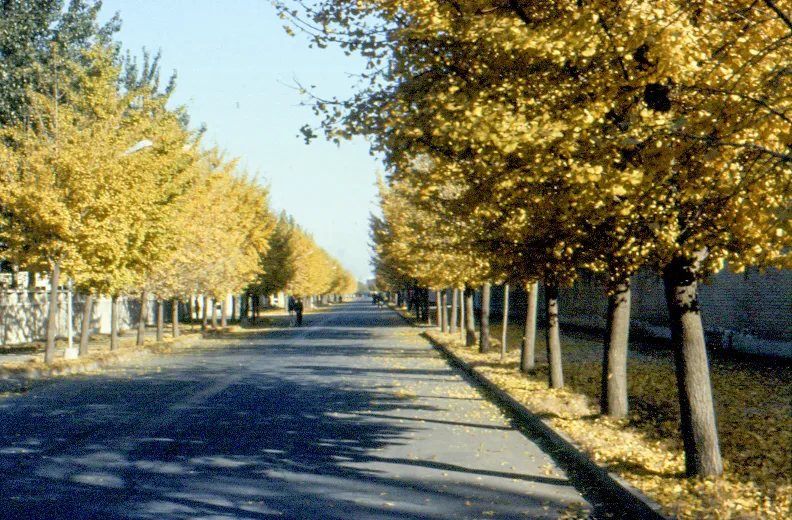
Photo: Szilas, Public domain, via Wikimedia Commons
Beijing's investment map is usually drawn with broad strokes: CBD, Lize, Zhongguancun, maybe Wangjing. The diplomatic quarter—the compact ring of embassies, chanceries, and staff housing around Sanlitun and Liangmaqiao—rarely gets its own line item. That is a miss. In 2026, this micro-market is attracting a different kind of capital: US family offices, boutique hotel owners, and value-add operators willing to underwrite security, scarcity, and sustainability together.
A Market Defined by Proximity and Protocol
The diplomatic quarter is not a single submarket. It is a cluster of asset types with unusually specific demand drivers. Serviced apartments house rotating mission staff and contractors. Small hotels and guesthouses absorb visiting delegations, NGOs, and security-cleared consultants. Older compound villas and low-rise residential buildings sit behind gates that were designed for privacy long before they were designed for energy performance. Office annexes and retail plinths serve the daily logistics of diplomacy—visa processing, secure courier traffic, and the discreet service economy that surrounds it.
What unites these assets is not architectural style. It is proximity to a tenant base that values predictability, confidentiality, and physical security over rooftop amenities or lobby theatrics. That tenant base does not disappear when broader office demand softens. It does, however, become more selective. In 2026, that selectivity increasingly includes indoor air quality, backup power resilience, and documented environmental performance—requirements that align awkwardly with the 1990s mechanical systems still running in many compounds.
Why the Micro-Market Has Been Overlooked
US investors have spent the past several years focused on Beijing's newer trophy stock and on the green-certification premium in CBD and Lize. Those markets are legible: newer buildings, clearer lease comparables, and a growing body of diligence standards for embodied carbon and operating emissions. The diplomatic quarter is messier. Buildings are older. Ownership structures can be layered. Leases are often private, and tenant covenants are not always visible in the same way as multinational office leases.
That opacity is precisely where pricing inefficiency lives. Embassy-adjacent assets trade at a discount to headline CBD rents because they lack the same liquidity and the same tenant-roll transparency. But they also carry lower turnover among security-sensitive occupiers, longer lead times for new supply, and a scarcity value that is difficult to replicate. New diplomatic housing is not built quickly. New greenfield compounds near chanceries are rare. The result is a micro-market where asset selection matters more than macro timing.
Green Retrofits: The Economics Compared with CBD and Lize
The sustainability case in the diplomatic quarter is not identical to the case in CBD or Lize. In Lize, green certification is often embedded in new-build economics and marketed as a headline feature. In CBD, the green premium is increasingly visible in lease negotiations and in the pricing gap between retrofitted and unretrofitted towers. In the diplomatic quarter, the retrofit case is more granular and more operationally driven.
Older compounds often have the highest energy intensity and the weakest indoor-environment controls. Envelope upgrades, heat-pump or variable refrigerant flow replacements, demand-controlled ventilation, filtration, and domestic water efficiency can reduce operating costs while addressing tenant concerns that are not purely environmental. For diplomatic and security-sensitive occupiers, resilience is part of the sustainability story: backup power, water storage, and air-quality failsafes are risk-management features, not marketing extras.
The underwriting challenge is that retrofit capital must be priced against a rent premium that may be modest in absolute terms. Unlike a new Lize tower with a clear certification narrative, an embassy-adjacent 1990s compound may need a staged capital plan: first the systems that tenants can feel and measure, then the certifications that support exit liquidity. US investors should compare retrofit economics not only with CBD and Lize benchmarks but also with the cost of doing nothing—vacancy risk, shorter lease terms, and a widening gap between compliant and non-compliant assets.
The US Investor's 2026 Diligence Checklist
For US capital, the diplomatic quarter requires a checklist that sits at the intersection of real estate, security, and environmental diligence.
- Tenant and adjacency review. Map embassy leases, mission housing contracts, and security-sensitive occupiers. Understand renewal patterns and whether demand is tied to a single government budget cycle.
- Security and access assessment. Review perimeter design, vehicle access, screening, and building systems that may be subject to diplomatic security requirements. Security upgrades can be as material as HVAC upgrades.
- Retrofit feasibility. Commission a building-systems audit before pricing green upgrades. Confirm whether the envelope, roof, and plant rooms can accommodate electrification, filtration, and efficiency measures without disrupting occupied floors.
- Certification pathway. Determine whether LEED, WELL, or China's green building label is realistic, and whether the target tenant base actually values the certification or simply the performance behind it.
- Lease and covenant transparency. Diplomatic leases can be confidential. Build a rent-roll view from multiple sources and stress-test income against longer vacancy periods and slower approval processes.
- Exit liquidity. Identify the likely buyer pool at exit: local operators, international serviced-apartment brands, or other cross-border investors. The green retrofit should broaden that pool, not narrow it.
- Currency and capital controls. Model renminbi exposure and repatriation assumptions conservatively. The micro-market's illiquidity premium should be reflected in the discount rate, not just the going-in cap rate.
A Small Market with a Distinct Signal
The diplomatic quarter will not become Beijing's largest investment theme. It is too small, too gated, and too idiosyncratic for that. But it is a useful signal for how the city's luxury market is maturing. Security, sustainability, and scarcity are converging in assets that were once valued mainly for address and access. For US investors willing to do the granular work, the chancery effect is less about chasing a label than about recognizing a micro-market where the green upgrade is also a resilience upgrade—and where the right older compound may be worth more than its age suggests.