Carat, Clarity, Carbon: A Diligence Scorecard for Beijing Branded Residences
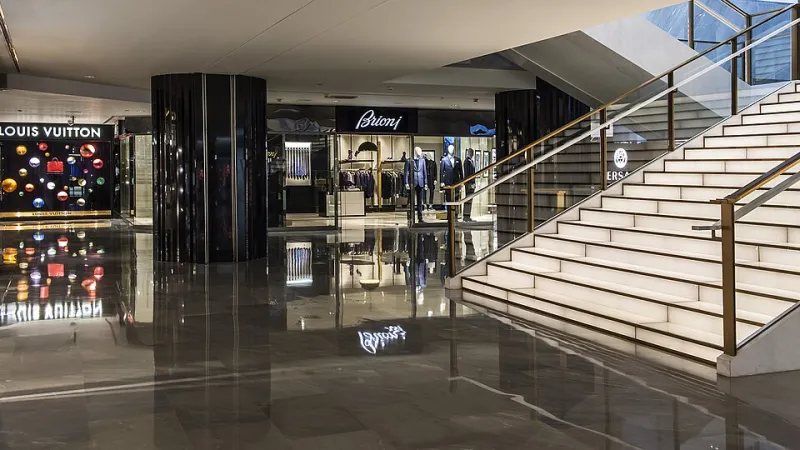
Photo: Happyrusxs, CC BY-SA 4.0, via Wikimedia Commons
Beijing's branded residence sector has learned to speak the language of sustainability fluently. LEED plaques, WELL certifications, and carbon-neutral pledges now appear alongside the names of international hotel operators in marketing materials for prime serviced apartments. For US family offices seeking exposure to Beijing real estate without direct development risk, the combination is seductive: a recognized brand, a turnkey ownership structure, and a green narrative that travels well to investment committees. But the diamond trade offers a useful caution. A stone's beauty depends on attributes that can be graded independently—cut, clarity, carat, color—and on provenance that can be verified. Branded residences deserve the same discipline. In 2026, the green premium in Beijing is real but uneven. The following seven-question scorecard is designed to help US private capital test whether that premium is cut to last, or merely polished for the sales gallery.
Why the Brand Premium Needs a Separate Ledger
A branded residence bundles three distinct assets: the real estate, the operator's service platform, and the building's environmental performance. Marketing often collapses them into a single story. Underwriting should not. US family offices are accustomed to separating asset management fees from property-level returns; the same rigor applies here. Ask the sponsor for a line-item allocation of the purchase price across land, construction, brand affiliation, amenity programming, and verified green building performance. If the developer cannot or will not disaggregate those components, the green premium is a sentiment, not a metric. The first diligence task is to force that separation before a letter of intent is signed.
The Seven-Question Scorecard
1. Cut: What is the green premium actually cutting? In diamonds, cut determines brilliance. In a branded residence, the cut is the precise allocation of your purchase price among brand, amenities, and building performance. Request a comparison of the subject property against unbranded luxury stock within the same submarket—Lize, the CBD, or Sanlitun—and ask what portion of the price difference is attributable to the operator's service package versus measurable energy and water efficiency. A premium that cannot be attributed is a premium that cannot be defended at resale.
2. Clarity: Can you see the building's operating data? Request at least 24 months of whole-building energy and water consumption, sub-metered by use. Look for interval data, not annual summaries. Ask whether the building tracks energy-use intensity against a baseline and whether that baseline was established before or after occupancy. In Beijing, where district heating and municipal water are priced differently from electricity, the data should distinguish sources. If the seller provides only certificates and not consumption records, clarity is compromised.
3. Carat: How heavy is the operator agreement? Branded residences often depend on a hotel management company whose contract term, renewal rights, fee structure, and termination provisions determine whether the brand is a durable asset or a temporary label. Review the management agreement and the residence rental program separately. Ask what happens to the brand if the hotel next door changes hands, and whether owners have any consent rights. The weight of the operator's commitment is a core value driver, not a footnote.
4. Color: How green is the power supply? Beijing's grid remains carbon-intensive, and a building's operational carbon footprint depends heavily on when and how electricity is procured. Ask about renewable energy certificates, participation in green power trading, on-site solar generation, and the use of carbon offsets. Offsets are not equivalent to avoided emissions. In diamond terms, color is about the absence of tint; in Beijing, it is about the carbon intensity of the electrons that run the building.
5. Provenance: Who built it, and who verified it? Certification levels matter, but so do the certifying body and the date of assessment. A LEED Gold plaque awarded at design stage is not the same as a post-occupancy certification. Verify the rating system version, the certification date, and whether the building has been re-certified. Check the developer's track record on delivered performance in other projects. Provenance also includes the contractor and the commissioning agent—names that rarely appear in marketing brochures but often explain performance gaps.
6. Governance: Who controls the service charge and the capital reserve? In branded residences, the operator frequently controls the service charge budget and the reserve fund. Ask for the reserve study, the sinking fund balance, and the decision rights of the owners' association. Sustainability upgrades—from heat recovery to smart metering—require capital and consent. Without clear governance, green promises become unfunded mandates. US investors should map decision rights before closing, not after the first special assessment.
7. Exit: Will the green premium survive resale? The ultimate test is liquidity. Compare resale values of certified versus non-certified branded residences in the same submarket over the past three years. If the premium compresses at exit, you are holding a depreciating amenity rather than an appreciating asset. Ask brokers what buyers actually pay for: the brand, the building performance, or both. In a market where new supply continues to arrive with fresher certifications, the exit question is not whether the building is green today, but whether it will still be green relative to its peers in five years.
Applying the Scorecard: A US Lens
US family offices bring specific considerations to Beijing branded residences. FIRPTA withholding, estate-tax exposure, and the treatment of rental income under US tax rules all affect net returns. Currency hedging is another layer: a green premium denominated in renminbi may look different after hedging costs. The scorecard should be applied alongside those financial filters, not in isolation. A property that scores well on cut and clarity but poorly on governance or exit may still be unsuitable for a US taxable investor. Conversely, a lower-scoring asset with a strong operator and transparent data may offer a better risk-adjusted entry point.
Where Marketing Outruns Metering
The Beijing market has no shortage of green claims. Some are backed by rigorous commissioning and published performance data; others rely on design-stage certifications and aspirational language. The gap is widest in serviced apartment complexes where the hotel operator's own sustainability report is sometimes mistaken for the residence building's performance. US investors should insist on building-level data, not portfolio-level reporting. The distinction is the difference between a graded stone and a polished claim.
The Verdict: Grade Before You Bid
Beijing's branded residences can offer US private capital a credible combination of operator expertise and environmental ambition. But the green premium is not self-verifying. The seven-question scorecard—cut, clarity, carat, color, provenance, governance, and exit—provides a disciplined way to separate measurable performance from marketing polish. In 2026, the most valuable diligence tool may be a simple insistence on data. A diamond is graded before it is priced. Beijing's green branded residences deserve the same treatment.