The Thirsty Asset: Underwriting Water Risk in Beijing's Premium Hospitality and Office Portfolios

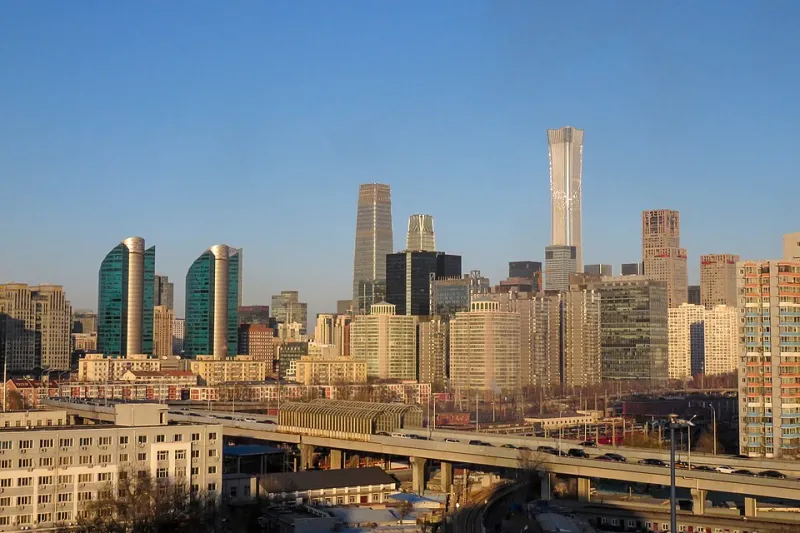
Photo by Photo by Felix Luo on Unsplash on Unsplash
The Diligence Gap Beneath the Spa Towel
For a US investor underwriting a Beijing hotel or prime office campus, the familiar checklist is crowded: lease covenants, capital reserves, energy performance, certification gaps, and the durability of tenant demand. Water usually appears late, if at all—often as a utility line item rather than a strategic risk. That is becoming harder to defend.
Beijing's water-allocation framework, including quota management, recycling expectations, and the emerging use of "blue-credit" style performance signals, is quietly reshaping how premium hospitality and office assets are operated and valued. The regime is not a single headline tax or disclosure mandate. It is a layered system of allocation, tariffs, reuse requirements, and reputational signals that can affect everything from landscape irrigation to cooling-tower performance to the viability of a luxury spa's water-intensive amenity program.
For cross-border professionals, the practical issue is translation: how does a Chinese regulatory and utility framework become a number in a US sponsor's model? The answer lies in disciplined diligence rather than broad alarm.
Why Water Is Becoming an Underwriting Item
Beijing has long managed water scarcity through allocation and pricing. What is changing in 2026 is the visibility of that management. Premium assets are more exposed because they consume water in visible, guest-facing ways: extensive landscaping, high-occupancy bathrooms, spas, pools, laundry operations, and food-and-beverage outlets. A limited-service office building may absorb a quota change with modest friction. A five-star hotel with a branded spa and manicured grounds has far less room to maneuver without affecting the guest experience.
At the same time, blue-credit or water-performance language is becoming part of the broader sustainability vocabulary that landlords, lenders, and corporate occupiers use in Beijing. Even where participation is not uniformly mandatory, the direction of travel matters. A US investor should treat water allocation as a potential constraint on revenue, not merely a cost to be passed through.
From Quota to Cash Flow
The first transmission channel is operating cost. Water quotas, tiered tariffs, and recycling mandates can raise the marginal cost of consumption above a certain threshold. For hotels, that threshold may be reached during peak season, when occupancy and landscape irrigation coincide. For office campuses, cooling towers and restroom demand can create a steadier but still material exposure. A model that assumes flat water intensity across a holding period may understate the cost of tighter allocation.
The second channel is capital expenditure. Drought-resilience measures—rainwater harvesting, condensate recovery, greywater reuse, low-flow fixtures, smart metering, and landscape redesign—are not always expensive in isolation, but they add up. More importantly, they may become necessary to preserve the asset's positioning. A luxury property that cannot maintain its gardens or spa experience without breaching allocation norms faces a choice between guest satisfaction and compliance. That is a capital-planning problem, not a utility bill.
The third channel is valuation. Prime Beijing assets are priced on durability of income and strength of tenant or guest franchise. If water risk threatens either, it belongs in the discount rate or the capital reserve. US REITs and private sponsors increasingly expect climate and resource risks to be quantified, even when the underlying rules are local and unfamiliar. A Beijing asset with a credible water strategy is easier to finance and easier to sell.
The Reputational Ledger
Reputational exposure is subtler but real. Global corporate occupiers and luxury travelers are attentive to environmental claims. A hotel that markets itself as sustainable while relying on unsustainable water practices creates an obvious mismatch. For office landlords, blue-credit performance can become part of tenant questionnaires and green-lease discussions. The risk is not only regulatory penalty; it is a credibility gap that can weaken leasing momentum and brand value.
This is especially relevant for US brands operating in Beijing. A flagship store or corporate office may sit inside a campus whose water management is controlled by the landlord. The occupier's own sustainability reporting may depend on data the landlord does not readily provide. Diligence should therefore extend beyond the lease demised premises to the base building and common areas.
A Practical Diligence Checklist
Before signing, US investors and occupiers should request and verify the following:
- Current water allocation and any quota history for the asset, including how allocation is calculated and reviewed.
- Tariff structure, including tiered pricing, surcharges, and any seasonal or usage-based adjustments.
- Recycling and reuse infrastructure: greywater systems, rainwater harvesting, condensate recovery, and irrigation controls.
- Metering architecture: whether water use is submetered by tenant, by major system, or only at the building level.
- Capital plan for water-efficiency upgrades and drought-resilience measures, with remaining useful life of existing equipment.
- Disclosure practices: what water data the landlord reports, to whom, and under what standards.
- Insurance and business-continuity arrangements for water-supply interruption or allocation curtailment.
- Green-lease or sustainability clauses that allocate responsibility for water data, upgrades, and compliance.
Questions for Beijing Landlords
The checklist is only as good as the answers. US counterparties should put direct questions to landlords and asset managers:
- Has the asset ever exceeded its water allocation, and what was the consequence?
- How are water costs allocated between landlord and tenants in multi-let office assets?
- What percentage of landscape irrigation is served by non-potable sources?
- Are spa, pool, and laundry operations separately metered, and what is their water intensity per occupied room?
- How would a 10% reduction in allocation be absorbed without affecting guest service or tenant operations?
- What water-performance data can be provided monthly, and in what format?
- Are there pending capital works related to water reuse or quota compliance?
The Bottom Line
Beijing's water rules are not a reason to avoid premium assets. They are a reason to underwrite them with greater precision. For US investors and occupiers, the winning approach is neither to ignore the issue nor to treat it as an undifferentiated China risk. It is to ask specific questions, obtain specific data, and price specific consequences.
In a market where luxury is increasingly defined by resilience as well as finish, the water ledger deserves a place beside the energy model and the lease abstract. The asset that can account for every drop is the asset that is easier to finance, easier to lease, and easier to defend when the next dry season arrives.